

Summary: Every child deserves to feel happy, confident, and emotionally balanced at school. After all, education is not just about grades, it’s about developing healthy minds too. Schools play a big role in shaping how students think, feel, and connect with others. That’s why improving mental well-being has become a key focus for educators and parents today. Let’s explore what mental well-being really means, why it matters, and how schools can create a positive environment where every student can thrive.
——————————————————————————————————————————————————————————————————————————————-
Practical Ways to Support Mental Well-Being in Schools
How to Improve Mental Health? | Student Counseling Services | Stress Management Techniques
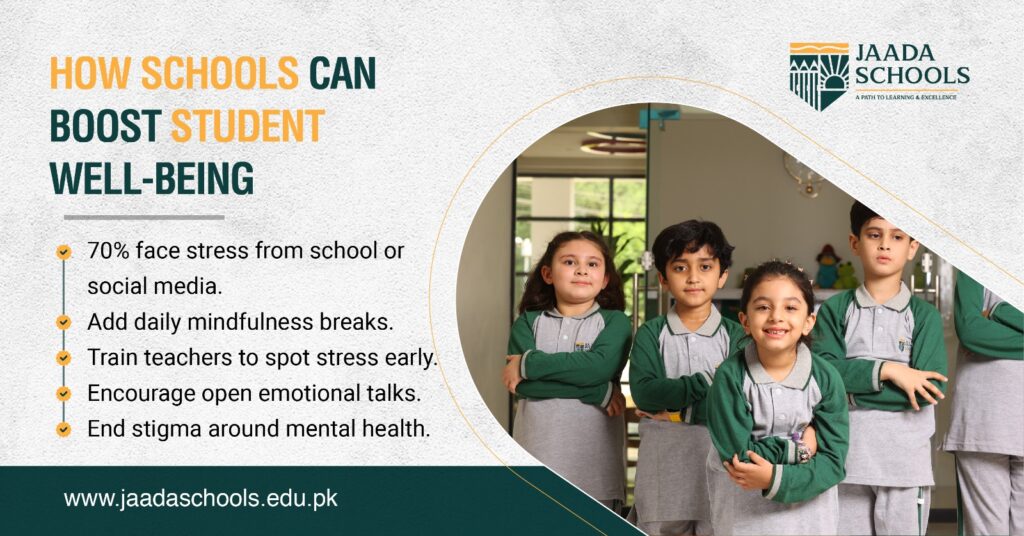
The increase in mental health problems among students is linked to several factors. Experts believe it’s a mix of increased awareness, modern stressors, and changing lifestyles. Today’s students face more pressure than ever, from academic performance to social media comparisons. Societal changes, lack of proper resources, and even inequality add to this stress. Persistent stigma around mental health education also prevents students from seeking help when they need it.
Technology plays a double-edged role; it connects students but also exposes them to online bullying and constant digital overload. These challenges can quickly affect students’ emotional wellness if not addressed early.
But the good news? Schools can make a big difference. With proper planning and support, teachers can turn classrooms into spaces that nurture mental well-being every day. Jaada Schools have two campuses in Lahore, where students’ mental well-being is our priority.
What Is Mental Well-Being and Why Does It Matter?
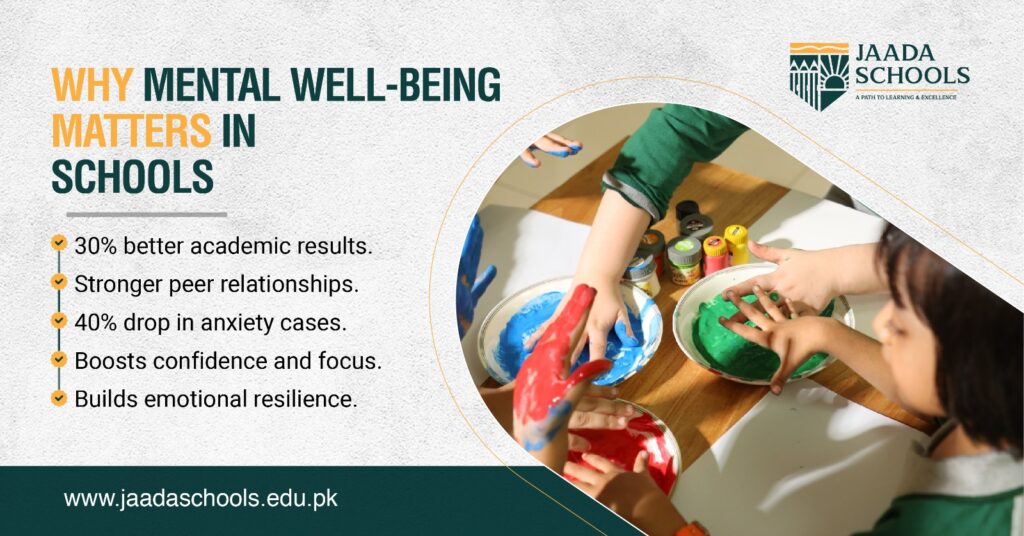
In simple words, mental well-being means feeling good inside, being able to handle life’s ups and downs, and staying positive even when challenges appear. It’s not just the absence of sadness or anxiety; it’s about feeling balanced, motivated, and supported.
For students, mental well-being affects every part of school life. When children feel emotionally strong, they are more focused, social, and confident. They perform better academically and build stronger relationships with teachers and peers.
However, when emotional well-being is ignored, students may struggle to manage emotions, concentrate, or connect with others. Over time, it can lead to stress, low motivation, or behavioral issues.
That’s why prioritizing mental well-being in schools isn’t optional anymore; it’s essential. Schools that care about student wellness create safer, more welcoming learning spaces where every child can do their best.
5 Ways to Improve Mental Well-Being in Schools
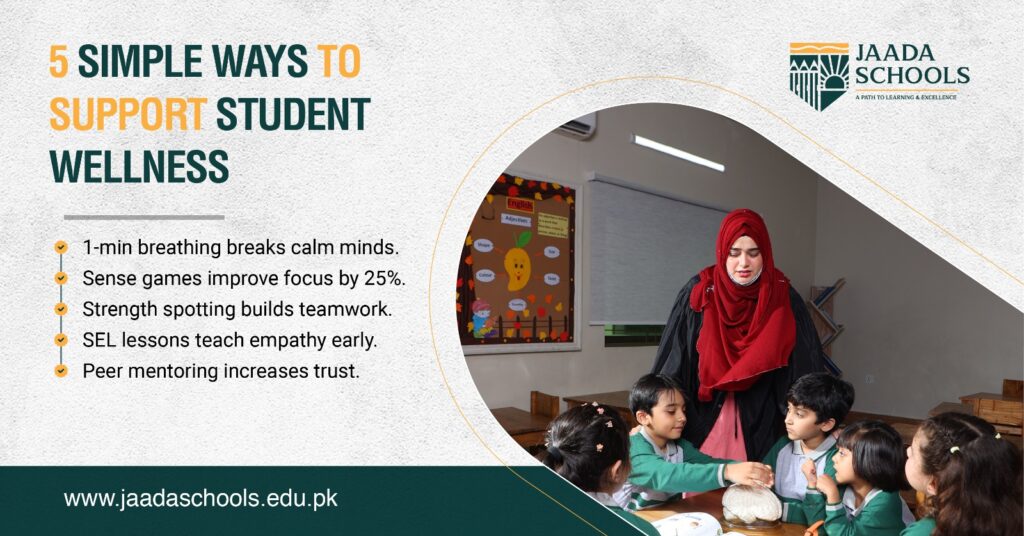
As a school or teacher, supporting students’ mental well-being starts with small, consistent steps. Contact us to discuss our methods. Here are five easy and effective ways to build a positive, caring school environment.
1. Breathing Exercises: Calm the Mind and Body
Simple breathing exercises can help students manage stress and stay focused. When practised daily, they calm the nervous system and improve emotional balance.
Teachers can start or end classes with a one-minute breathing break. Ask students to close their eyes, inhale deeply, and exhale slowly. This easy stress management technique helps them feel relaxed and more in control.
Even short sessions can lower anxiety, boost focus, and improve classroom behavior. Over time, this habit encourages mindfulness and self-awareness—two key parts of emotional intelligence.
2. Sense Scavenger Hunt: Engage the Senses
A “sense scavenger hunt” is a fun, hands-on activity that helps students stay present. It involves noticing what they see, hear, smell, taste, and touch in their surroundings.
This simple activity brings attention back to the moment, helping children reduce stress and overthinking. It’s one of the easiest emotional well-being activities to add during breaks or after long lessons.
Teachers can use this activity outdoors, encouraging kids to explore nature. It helps improve mood and boosts concentration through gentle physical activities—making it good for both mind and body.
3. Strengths Spotting: Celebrate What Makes Each Student Unique
Every child has strengths—but many don’t realise them. “Strengths spotting” helps students identify and appreciate their personal talents. Teachers can create short exercises where classmates share positive observations about each other.
For example, one student might notice another’s kindness, creativity, or teamwork. This activity builds confidence and supports a healthy self-image. It also promotes social-emotional learning, teaching students to recognise and value others’ strengths, too.
With regular practice, it improves group harmony and reduces competition or comparison.
4. Develop Age-Appropriate Curricula: Build Emotional Skills Early
Schools should develop SEL curriculum (Social-Emotional Learning) programs that match each age group’s needs. Younger children need help naming emotions and managing impulses, while older students may focus on decision-making and empathy.
A strong mental health education program helps children understand emotions, relationships, and coping strategies. It empowers them to handle real-life challenges more confidently.
When combined with creative teaching and group activities, such programs help students build lasting cognitive skills—the ability to think clearly and solve problems.
5. Peer Mentoring and Counseling: Build a Supportive Network
Sometimes, students open up better to their peers than to adults. That’s where peer mentoring and student counseling services come in. These programs give students a safe space to talk, share, and seek guidance.
Trained mentors or counselors can help students manage academic pressure, social anxiety, or family challenges. This support creates a culture of trust and care, key to improving mental well-being in schools.
When schools combine peer mentoring with open communication, they encourage a community that values kindness and understanding.
Real Examples of Student Wellbeing Programs
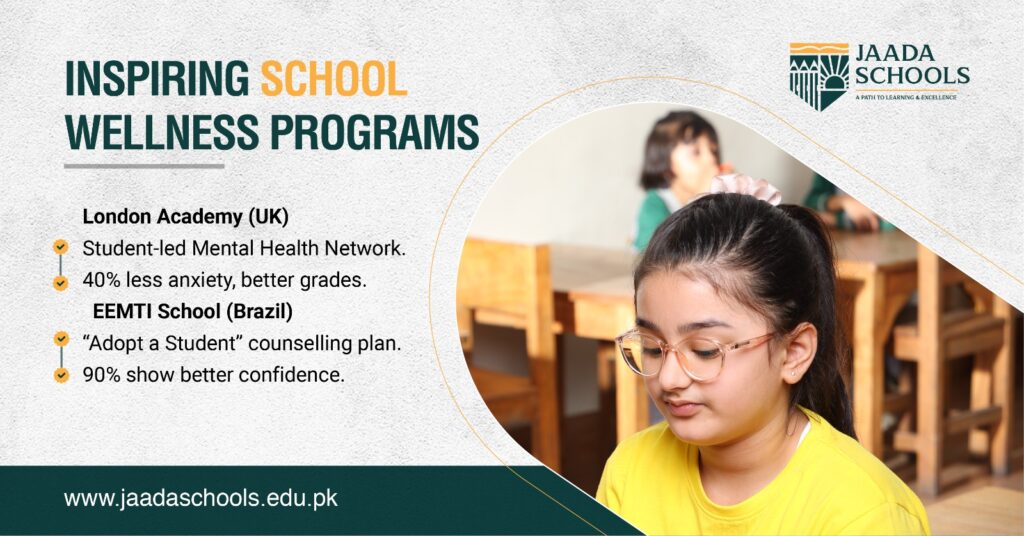
Sharing real examples of successful student wellbeing programs can help other schools start their own. Here are two inspiring stories from the World’s Best School Prizes initiative.
London Academy of Excellence, UK
The London Academy of Excellence in the UK was a Top 3 finalist for the World’s Best School Prize for Supporting Healthy Lives 2022.
The school has students from many different backgrounds, including those whose families never attended university. Many face extra pressure, so the school created a strong wellbeing plan to support mental health.
They started by studying child development research and then made a plan that fit their school’s needs. A major part of this plan is the Mental Health Network, which spreads awareness and trains student volunteers as wellbeing ambassadors. These ambassadors learn about mental health and suggest new ideas to help their classmates.
The school also held a Mindspace Conference with other schools and mental health experts. This event encouraged students to become mental health leaders in their schools.
After these efforts, depression and anxiety levels dropped, academic results improved, and students felt happier and more confident about their well-being.
EEMTI Joaquim Bastos Gonçalves, Brazil
The EEMTI Joaquim Bastos Gonçalves school in Brazil won the World’s Best School Prize for Supporting Healthy Lives 2023.
Located in the small city of Carnaubal, many of the city’s residents studied at this school. During the pandemic, teachers saw a big drop in students’ mental health. When in-person classes started again, many students faced anxiety, trouble communicating, and even self-harm.
To help, the school started the “Adopt a Student” project, offering online counseling sessions. Because there weren’t enough psychologists in the city, the school partnered with professionals through social media.
Launched in 2021, this project gives students at least one counseling session per week, focusing on self-care, confidence, acceptance, and resilience.
The results were excellent — students showed better self-esteem, higher grades, and more emotional stability. Other schools in Brazil are now looking to copy this idea.
This example shows that even with limited resources, a community can make a big difference in improving student well-being.
What is included in Jaada School’s Educational Policy for Mental Well-Being of Children in School?
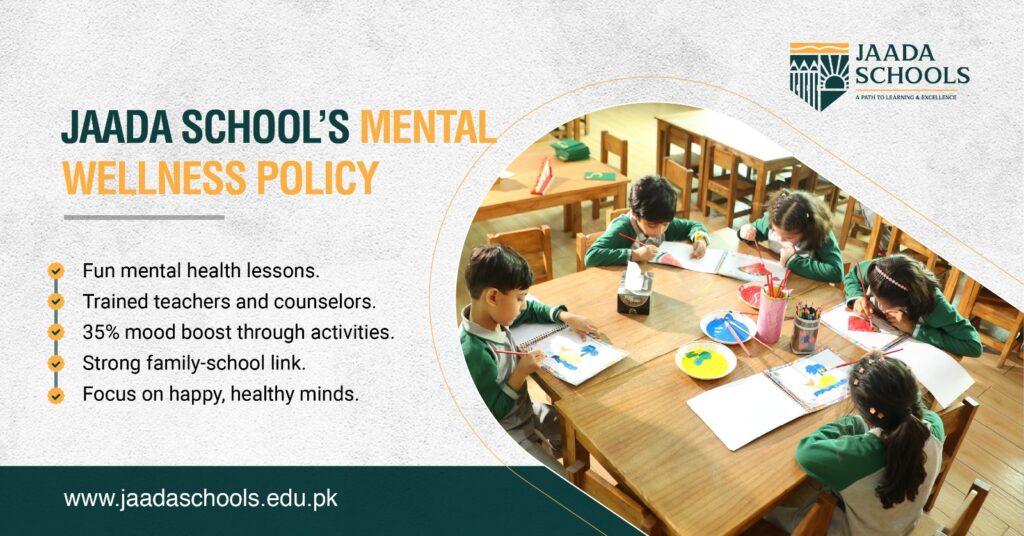
Schools that focus on mental well-being not only improve student happiness but also academic success. When mental health becomes part of daily school life, students learn to manage emotions, connect better, and grow stronger.
Encouraging emotional intelligence, healthy habits, and positive connections creates a learning space where children feel valued and supported. Teachers and parents together can make this change happen—one small step at a time.
At Jaada Schools, we believe every child deserves complete emotional, physical, and mental support. Our educational policy is designed to strengthen students’ mental well-being through structured programs and supportive systems. Here’s what we include:
1. Comprehensive Mental Health Curriculum
Our mental health education plan teaches students how to manage emotions, handle stress, and build resilience. Lessons are interactive, fun, and suitable for different age levels.
2. Trained Teachers and Counselors
We train teachers to identify early signs of stress and emotional difficulty. With professional student counseling services, students always have someone to talk to without fear or judgment.
3. Integration of Physical and Creative Activities
We include regular physical activities like sports, dance, and yoga to promote energy, focus, and happiness. Creative arts also allow emotional expression and confidence-building.
4. Family and Community Involvement
We work closely with parents and community experts to extend wellness support beyond classrooms. Together, we ensure every child receives complete care for their emotional well-being and academic success.
Conclusion: Build a Happier and Healthier School Together
Improving mental well-being in schools doesn’t require big changes—it starts with care, understanding, and small daily actions. When teachers, parents, and students work together, schools become safe places for growth and joy.
At Jaada School, we go beyond academics to nurture confident, happy minds. Our focus on emotional well-being helps students learn better and live happier. Admissions are open. Give your child the care, confidence, and education they deserve.
Frequently Asked Questions
How can teachers support students’ emotional wellness?
Teachers can use stress management techniques like breathing breaks, reflection sessions, or classroom discussions. Encouraging open communication and practicing kindness also helps build trust and reduce anxiety.
What are some easy ways to improve mental health in schools?
Schools can focus on how to improve mental health by combining fun, mindfulness, and support. Activities like meditation, journaling, or group games help students relax and express themselves safely.
How does social-emotional learning benefit students?
Social-emotional learning (SEL) helps children understand feelings, manage relationships, and make good decisions. It teaches empathy and teamwork, which are just as important as academic success.