

Summary: Every parent wants their child to feel safe, confident, and eager to learn, and that journey begins with secure attachment in the early years. When children receive warmth, patience, and emotional support from both home and school, they build the trust they need to explore, communicate, and grow. It strengthens a child’s behavior, emotional balance, and learning habits, creating the foundation for lifelong success.
——————————————————————————————————————————————————————————————————————————————-
Building a Strong Foundation With Secure Attachment in Early Years
Anxious Attachment Style | Cognitive Development | Emotional Wellbeing
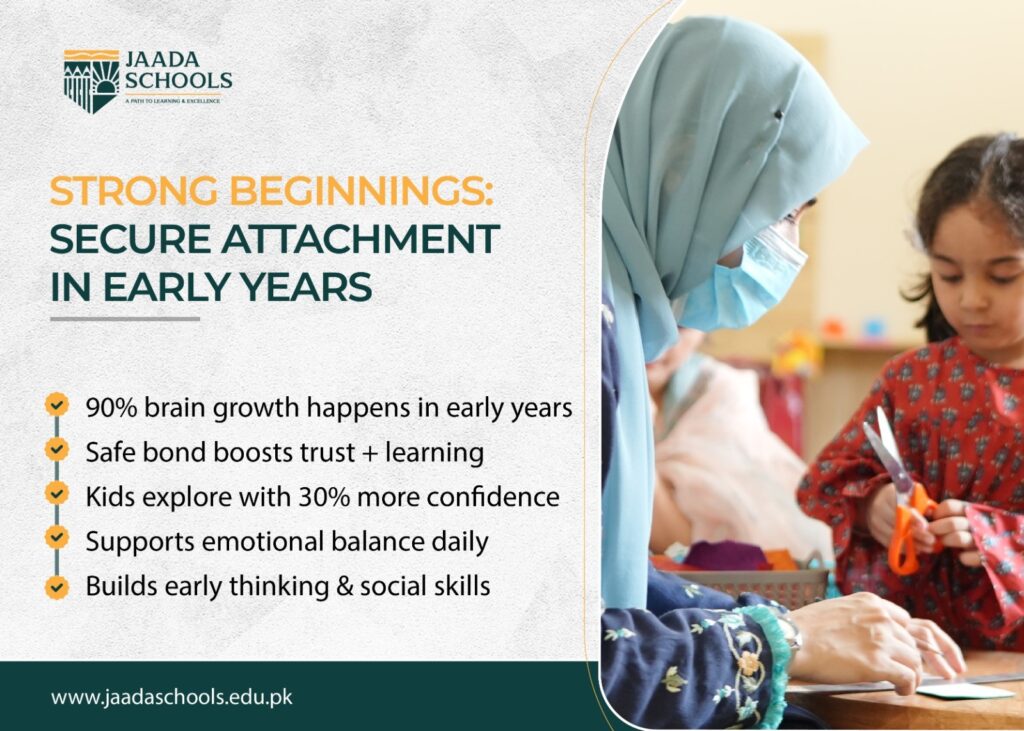
Secure attachment is the bond a child forms with parents or caregivers in the first years of life. It shapes how a child trusts, learns, and grows. When children feel safe, they explore with confidence. This comfort helps them learn about people and the world. It also supports Cognitive development, Emotional regulation, and emotional well-being, which parents value the most.
Understanding Secure Attachment And Its Importance
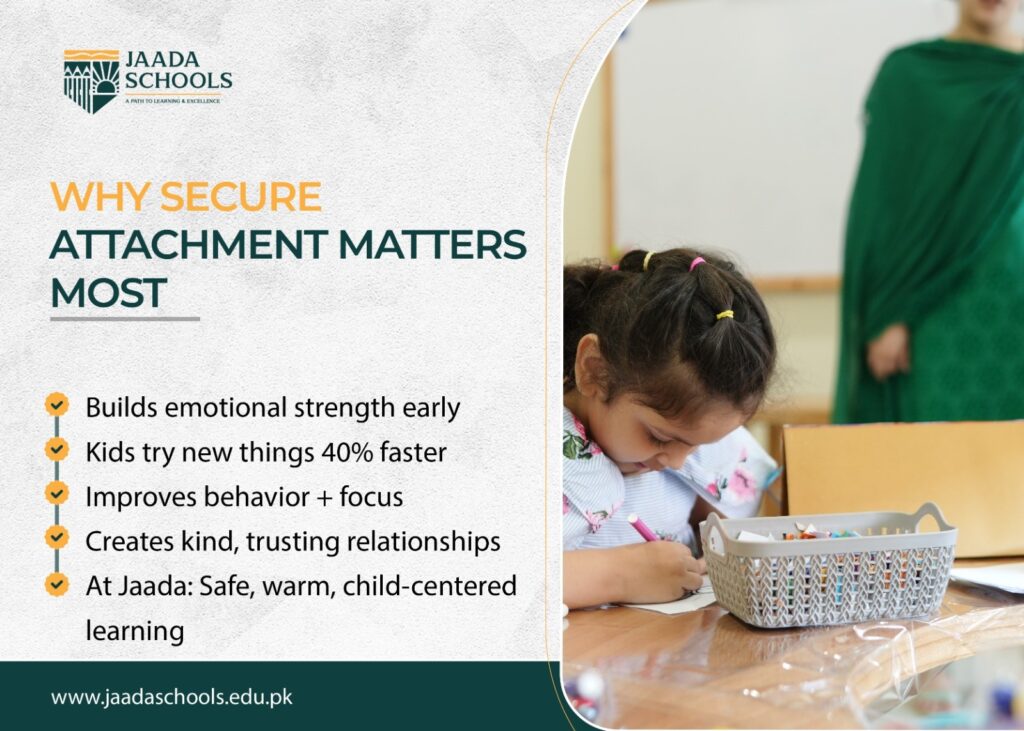
Many parents ask, “What is Secure Attachment, and why is it so important?” In simple words, it helps children build strong emotional skills, boosts their confidence to try new things, and supports them in forming Healthy relationships filled with kindness and trust. It guides children toward stable emotions, good behavior, and independence because they trust adults to support and guide them. This early bond shapes how they solve problems, express needs, and manage emotions, making it the foundation of strong learning habits in school.
Experts explain through attachment theory that these early connections influence a child’s focus, behavior, and academic success. At Jaada Schools, secure attachment is seen as more than emotional support; it is a complete learning environment where children feel safe, valued, and excited to learn every day.
Key Points
- Builds Emotional Confidence: Secure attachment helps children stay calm, express feelings safely, and show kindness, which strengthens their emotional balance.
- Encourages Learning and Exploration: With trust and support, children try new activities, explore freely, and build strong problem-solving skills.
- Improves School Behavior and Focus: Early secure bonds lead to better attention, smoother behavior, and learning habits that help children grow academically.
- Jaada Schools Strengthens This Bond: Teachers offer warmth, consistency, and an understanding environment, helping every child feel connected and ready to learn with excitement.
Secure Attachment From Toddler Years to Early School Life
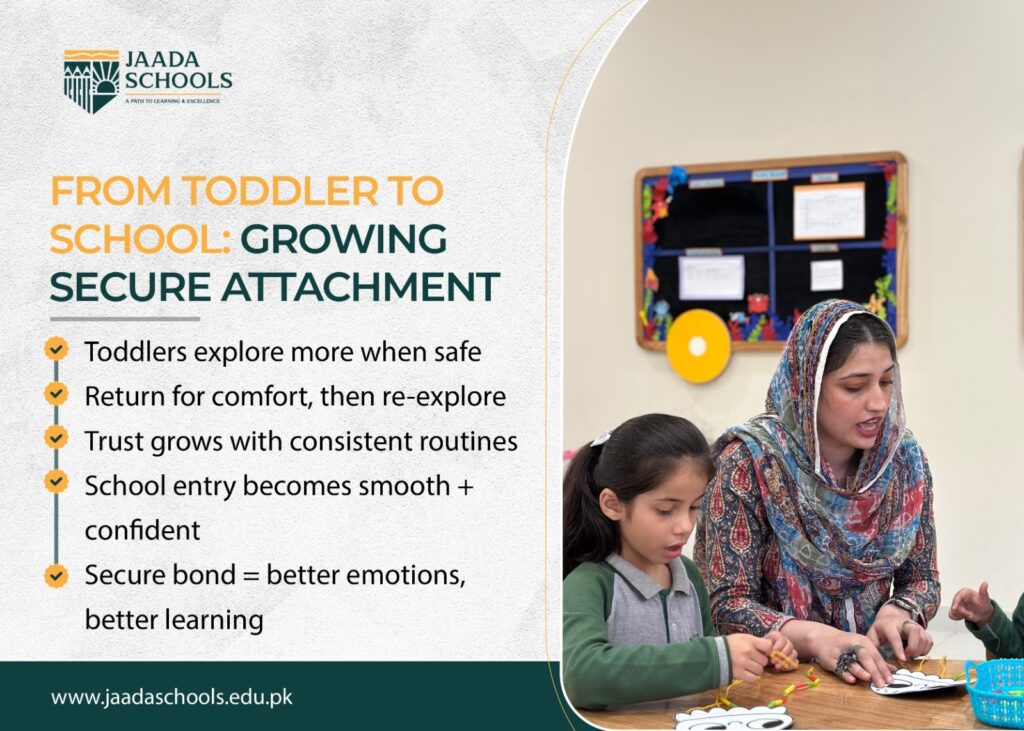
A strong attachment begins very early in life. Even in babyhood, small actions like smiles, eye contact, and gentle responses build the first layer of trust. These early moments teach children that someone will care for them. As they enter their toddler years, this bond becomes stronger and more visible in their daily behavior.
How Toddlers Develop Trust and Confidence
During toddler years, children start showing clear signs of secure attachment. They may stay close to caregivers during new situations, seek comfort when worried, and explore with confidence when they feel safe. They begin to understand that adults will return, listen, and respond to their needs. Because of this understanding, toddlers take small risks, try new activities, and learn about their surroundings.
Toddlers who feel secure develop kindness and independence at a steady pace. Even if they fall, feel unsure, or face new challenges, they return to their caregiver for reassurance. This consistent support helps them build emotional strength. Over time, they learn to regulate emotions, express needs, and trust the world around them.
Continuing the Attachment Process During School Entry
When toddlers step into school as new learners, the process of secure attachment continues but in a new environment. Children must adjust to unfamiliar faces, classrooms, and routines. Because of this change, they need emotional balance and gentle guidance. A school must understand their curiosity, excitement, and fears. Supportive teachers help children feel welcomed, valued, and comfortable.
At this stage, secure attachment becomes more important than ever. Children look for teachers who listen, friends who show kindness, and routines that feel predictable. When these elements are present, children develop confidence and settle into school life more smoothly. Check Jaada’s learning approach before enrolling your child.
Understanding Different Attachment Styles
Secure attachment differs from other patterns such as secure attachment style, avoidant attachment style, anxious attachment style, and insecure attachment style. Some children may feel distant, overly worried, or unsure about trusting others. These patterns may cause shy behavior or emotional struggles. However, with steady support, children can learn how to move from anxious attachment to secure. Patience, emotional warmth, and consistent routines help them feel safe again.
How Secure Attachment Supports School Success
As children grow in school, secure attachment strengthens communication skills. They learn Honest communication by watching teachers speak gently and respectfully. Over time, they form deeper bonds, show positive behavior, and enjoy learning. Safe relationships give them confidence to try, fail, succeed, and grow—all of which are essential for lifelong learning.
Common Myths And Simple Facts About Secure Attachment
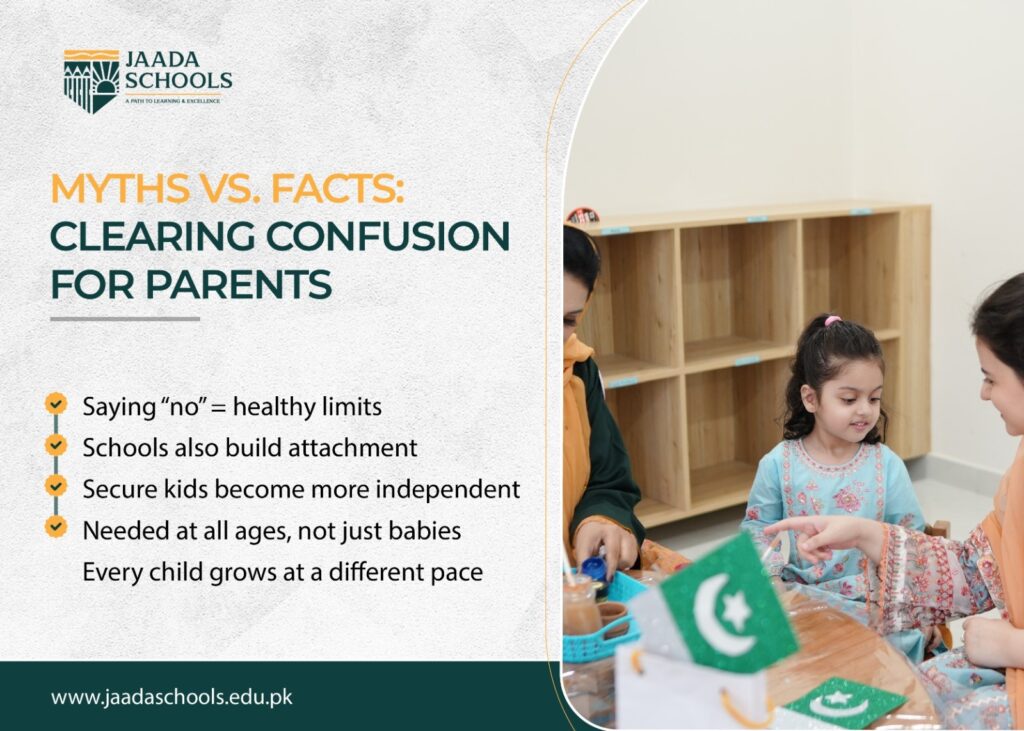
Many parents have heard different ideas about secure attachment. So, let’s clear a few myths with simple facts:
Myth: Secure attachment means never saying “no.”
Fact: Saying “no” kindly builds discipline. Children learn limits while still feeling loved.
Myth: Children develop secure attachment only at home.
Fact: Schools also help. With caring teachers and safe routines, secure attachment grows stronger.
Myth: Secure attachment makes children dependent.
Fact: It does the opposite. Children become more confident and independent.
Myth: Only babies need secure attachment.
Fact: All ages benefit. Even school children and teens need emotional safety.
Myth: Secure attachment works the same for all children.
Fact: Children learn differently. Some need space, while others need more comfort.
Parents also worry about behaviors. Sometimes, children with secure attachment in infants continue strong bonds as they grow. Yet some children show different patterns, such as the ones seen in secure attachment examples, which may vary based on personality.
Understanding these facts helps parents guide children better. When myths disappear, confidence grows. This clarity supports parents in making good choices for their child’s school and home environment.
How Does a Child With Secure Attachment Behave?
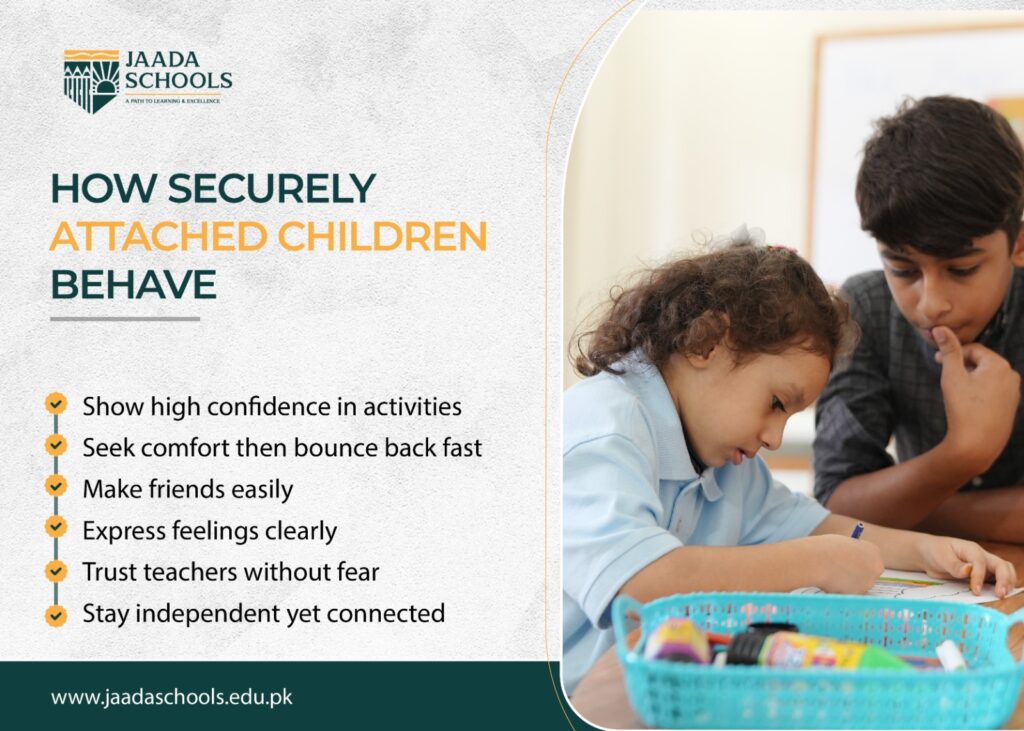
A child with secure attachment behaves with confidence, emotional balance, and trust—both at home and in school. These children feel safe because they know their caregivers and teachers respond with love, attention, and consistency. As a result, they explore freely, build healthy relationships, and manage their emotions much better than children who lack this foundation. In classrooms like those at Jaada Schools, where teachers offer warmth, routine, and emotional support, it shows in everyday actions. Such children are not overly clingy, nor are they distant; they strike a healthy balance. They show curiosity, communicate openly, seek help when needed, and bounce back quickly after challenges.
Parents often notice that their child becomes more independent, emotionally expressive, and socially active when the school provides a nurturing environment. Secure attachment is not about perfection—it is about a consistent, loving connection that helps a child feel “I am safe, I am loved, and I can do this.” This mindset shapes how they behave, learn, and interact with the world every single day.
Key Behaviors of a Securely Attached Child
- Shows confidence while exploring new activities.
- Returns to adults for comfort when needed, then continues playing.
- Builds friendships easily and plays cooperatively.
- Expresses emotions clearly without fear or withdrawal.
- Handles challenges better and calms down faster.
- Trusts teachers and caregivers, knowing support is available.
- Becomes independent but still connected to adults.
How Jaada Schools Build Strong, Secure Attachment in Early Childhood?
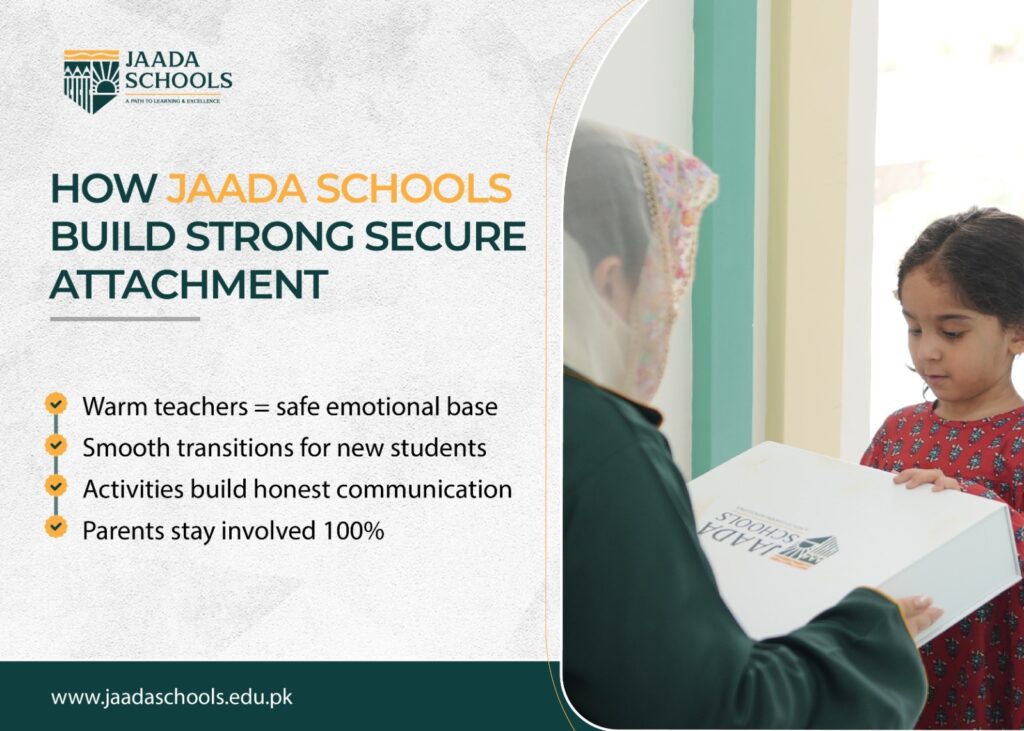
Jaada Schools, with its well-planned campuses in Central Park and Bahria Town Lahore, creates a learning environment where young children feel safe, understood, and deeply supported from their very first day. Each classroom is designed to offer comfort and stability, while teachers use warmth, patience, and predictable routines to help healthy attachment grow naturally. When children arrive, teachers greet them with care, observe their comfort levels, and respond to signals like shy smiles, nervous expressions, or excited energy.
Jaada also focuses on healthy learning habits by offering activities that strengthen thinking skills, creativity, and gentle exploration. Parents stay involved through regular updates and family events, which make the school-home connection stronger. Teachers are trained to notice different attachment patterns, including avoidant attachment style or anxious attachment style, and offer extra care when needed. With this thoughtful approach, Jaada Schools helps every child feel valued, supported, and ready for lifelong learning success.
Key Highlights of Jaada’s Secure Attachment Approach
- Warm and Responsive Teachers: Children are welcomed with kindness, observed closely, and supported through emotions and daily routines.
- Smooth and Gentle Transitions: New students receive extra comfort and time, helping them settle without fear or stress.
- Healthy Emotional and Social Growth: Activities build confidence, encourage Honest communication, and support safe emotional expression.
- Strong School-Home Partnership: Regular communication and family events keep parents involved, supporting the attachment bond to grow even faster.
Conclusion: Secure Attachment for Lifelong Learning Success
In the end, secure attachment is the foundation of emotional strength and healthy learning. It guides children through challenges, friendships, and new environments. When schools and parents work together, children feel supported. And when children feel supported, they grow confidently and joyfully.
Jaada Schools continues to build this strong foundation through love, structure, and understanding. Because of this, children learn better, communicate better, and feel happier at school. With secure attachment at the heart of early years, every child receives the care they deserve. Enroll your child in the best school in Lahore.
Frequently Asked Questions
What helps a child build secure attachment in school?
A child builds secure attachment in school through warm, responsive teachers, predictable routines, and consistent emotional support. When educators show patience, empathy, and encouragement, children feel safe and valued. This sense of security boosts confidence, reduces anxiety, and helps them engage positively with learning and classmates every day.
How can parents support secure attachment at home?
Parents can support it by listening actively, responding calmly, and spending meaningful one-on-one time with their child. Maintaining simple home routines and offering reassurance during stress also helps. When children feel seen, heard, and emotionally protected, they develop trust, confidence, and stronger connections with their parents over time.
Does secure attachment improve learning skills?
Yes, it greatly improves learning skills by helping children feel emotionally safe, which strengthens focus, memory, and problem-solving abilities. When children trust their caregivers and environment, they manage emotions better, cooperate more, and participate confidently in class. This emotional stability directly supports academic growth and long-term success.