

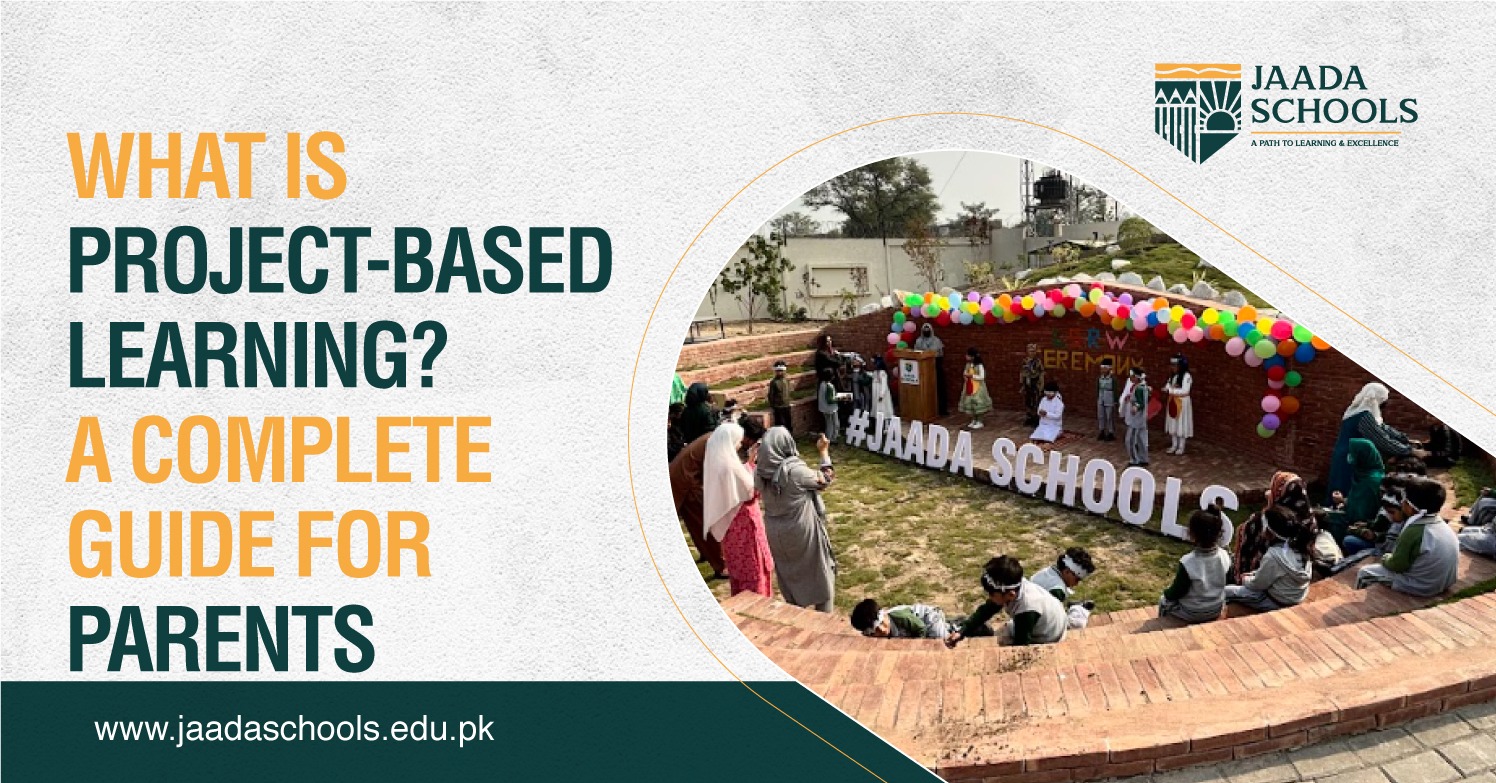
Summary: Project-based learning is transforming how children learn and grow in today’s world. Instead of memorizing facts, students learn by working on real-life projects that build understanding, confidence, and practical skills. This complete parents’ guide explains what project-based learning is, how it developed, and why it is one of the most effective approaches to modern education.
——————————————————————————————————————————————————————————————————————————————-
Understanding Project-Based Learning: A Parent’s Guide
Benefits of Project-Based Learning | Holistic Approach | Project-Based Learning Steps
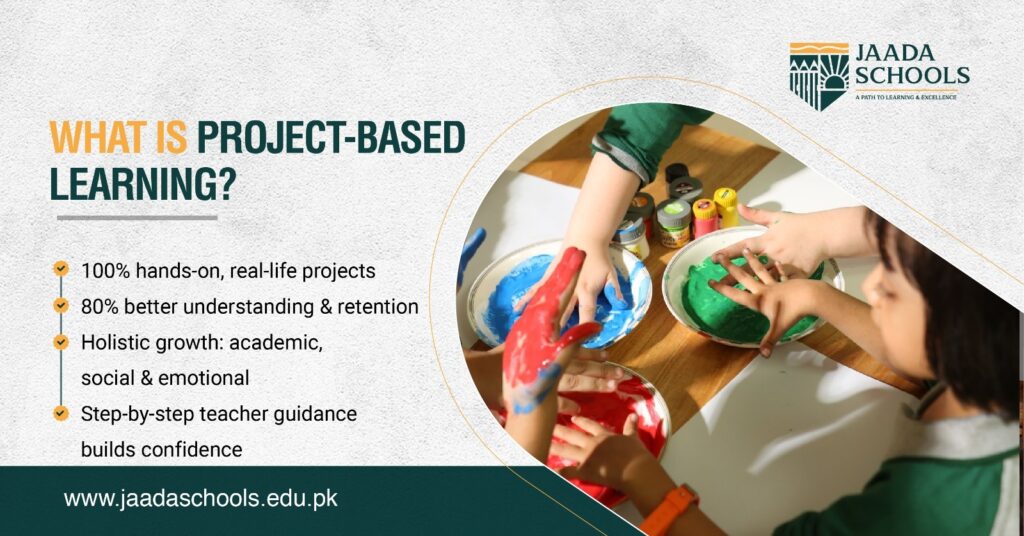
Project-based learning is a modern teaching approach where students learn by working on real-world projects. Instead of only reading books, children explore questions and solve problems. As a result, learning becomes active and meaningful.
Many parents ask what is project-based learning. In simple terms, it is a method where students work on tasks that reflect real-life situations. They research, plan, and present their ideas. Therefore, they understand topics deeply and remember them longer.
At Jaada School, this method supports a holistic approach to education. Children grow academically and socially. Moreover, teachers guide students step by step, so no child feels lost. This system builds confidence early.
The History of Project-Based Learning and Its Global Growth

The idea of learning is not new. In fact, it started more than 100 years ago. Educational thinkers believed children learn better by experience. Therefore, schools slowly moved from rote learning to practical work.
Later, this approach became popular in leading schools around the world. Research showed strong benefits of project-based learning. Students performed better and showed more interest. Consequently, parents began to trust this system.
Today, many top educators support this method. They focus on Critical thinking and problem-solving. As a result, students are ready for future challenges.
Proven Strategies for Implementing Project-Based Learning Successfully
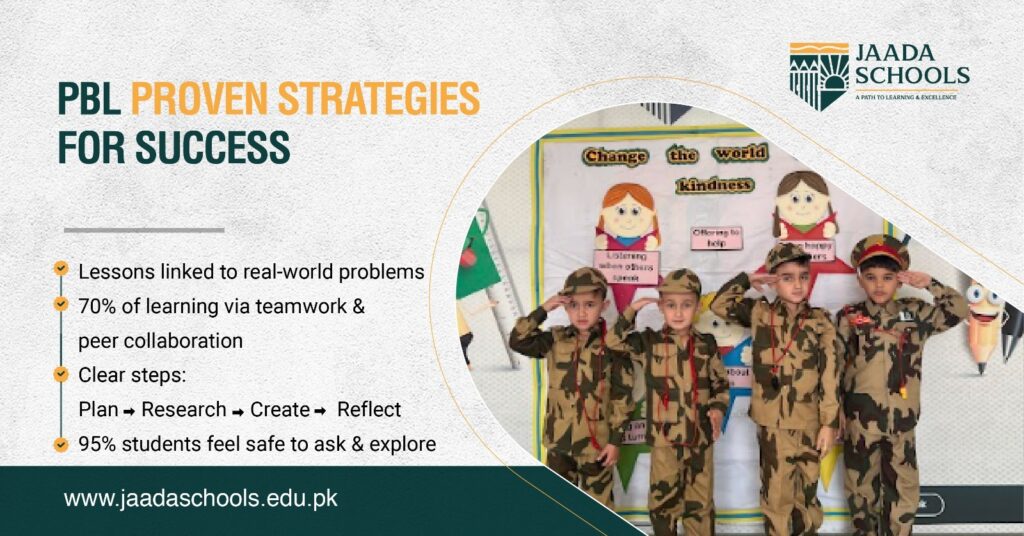
To make this learning successful, schools must follow clear and well-planned strategies. A strong system helps students stay focused and confident. Moreover, it allows teachers to guide learning in the right direction. When these strategies are applied correctly, learning becomes meaningful and enjoyable.
Start With Real-World Problems
Teachers design lessons around real-life challenges that students can understand. As a result, children feel connected to what they are learning. These problems encourage curiosity and deeper thinking. Therefore, students stay motivated throughout the project.
Encourage Teamwork and Collaboration
Students work in small groups to share ideas and responsibilities. This structure supports peer-to-peer learning and builds communication skills. Moreover, children learn to respect different opinions. Teamwork also helps students solve problems together.
Follow Clear Learning Steps
The learning steps keep students organized and focused. These steps usually include:
- Planning the project goals
- Researching information and ideas
- Taking action and creating solutions
- Reflecting on learning and outcomes
Each step supports steady progress. Teachers also check understanding at every stage. Therefore, no child feels left behind.
Create a Supportive Learning Environment
A positive learning environment plays a key role in success. Classrooms are safe, welcoming, and creative spaces. Students feel comfortable asking questions and sharing ideas. As a result, learning stays engaging and effective.
By using these proven strategies, this learning becomes a powerful tool for student growth and success.
How to Know If Project-Based Learning is Right for Your Kids?
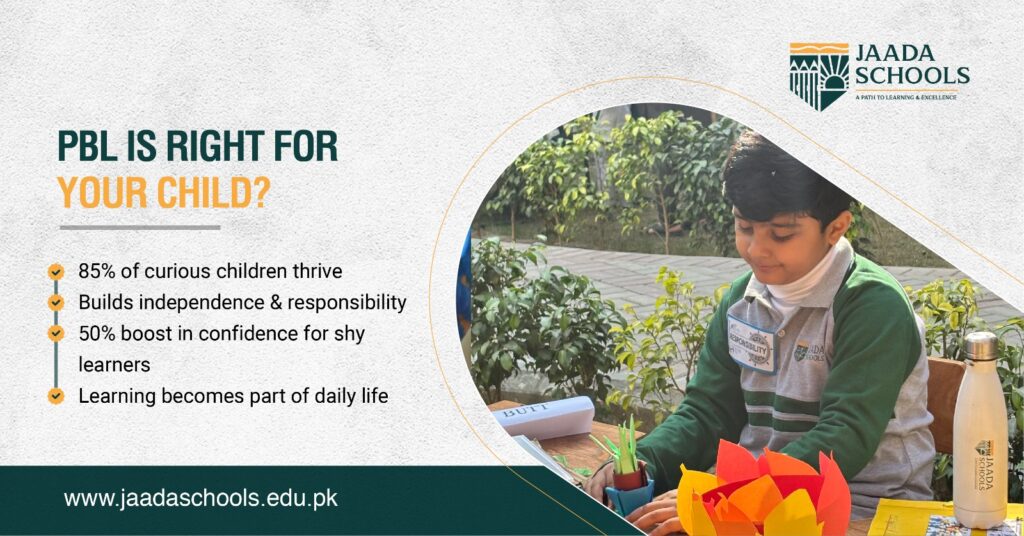
Every child learns uniquely. However, project-based learning supports a wide range of learning styles. If your child enjoys asking questions or exploring new ideas, this approach can be very effective. It encourages curiosity and keeps children actively involved in learning. Moreover, it helps shy students express themselves in a comfortable and supportive way.
Parents often see positive changes at home. Children talk more confidently about what they learn in school. They explain ideas clearly and share their project experiences with excitement. As a result, learning becomes part of daily conversations. Students also take more responsibility for their work, which builds independence.
Here are some signs that project-based learning may be right for your child:
- Your child enjoys hands-on activities and creative tasks
- Your child likes working in groups and sharing ideas
- Your child asks “why” and “how” questions often
- Your child learns better by doing rather than memorizing
- Your child shows interest in solving real-life problems
How Project-Based Learning Fuels STEM Skills for Future Careers?
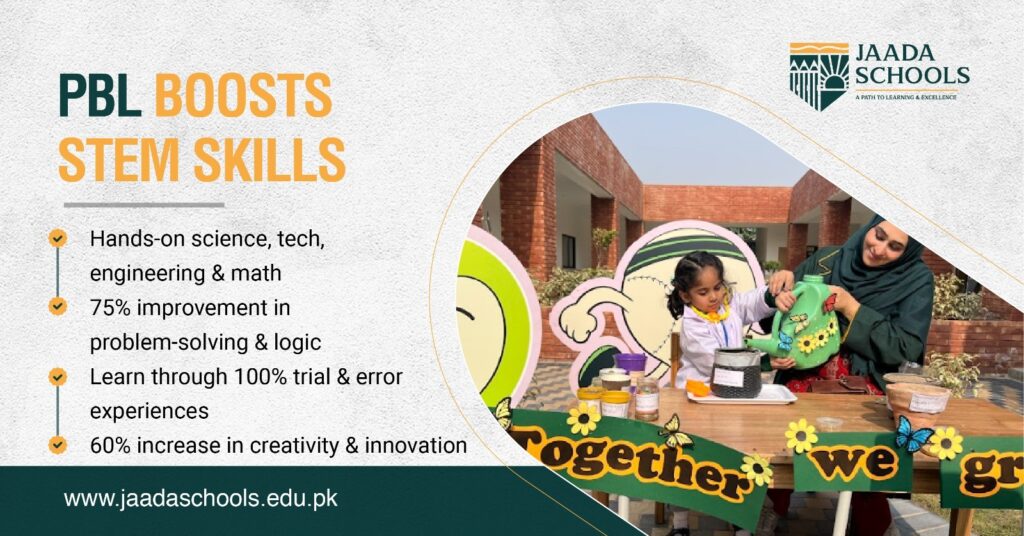
STEM education plays a key role in preparing children for the future. However, strong STEM skills cannot grow through memorization alone. Students need practice, exploration, and real-world connections. Project-based learning provides all of these naturally and engagingly.
Hands-On Learning Through Science and Technology
Project-based learning supports science and technology through experiments, models, and practical tasks. Instead of only reading about concepts, students test ideas and observe results. As a result, learning becomes deeper and more meaningful. Children understand how scientific ideas work in real life. This hands-on approach builds curiosity and confidence in STEM subjects.
Connecting Math to Real-Life Situations
The pbl process helps students see how math is used every day. For example, children may build simple machines, measure materials, or calculate costs for a project. They may also solve basic coding problems or create simple programs. Therefore, math feels useful and exciting instead of difficult or boring.
Building Problem-Solving and Logical Thinking Skills
STEM careers require strong problem-solving skills. Project-based learning encourages students to think logically and find solutions. When a project does not work as planned, students learn to adjust and try again. This process teaches patience and persistence.
Encouraging Creativity and Innovation
This learning method also supports creativity. Students are free to explore new ideas without fear of failure. Moreover, they learn that mistakes are part of learning. As a result, children gain confidence and develop innovative thinking.
Traditional Learning vs Project-Based Learning for Modern Education
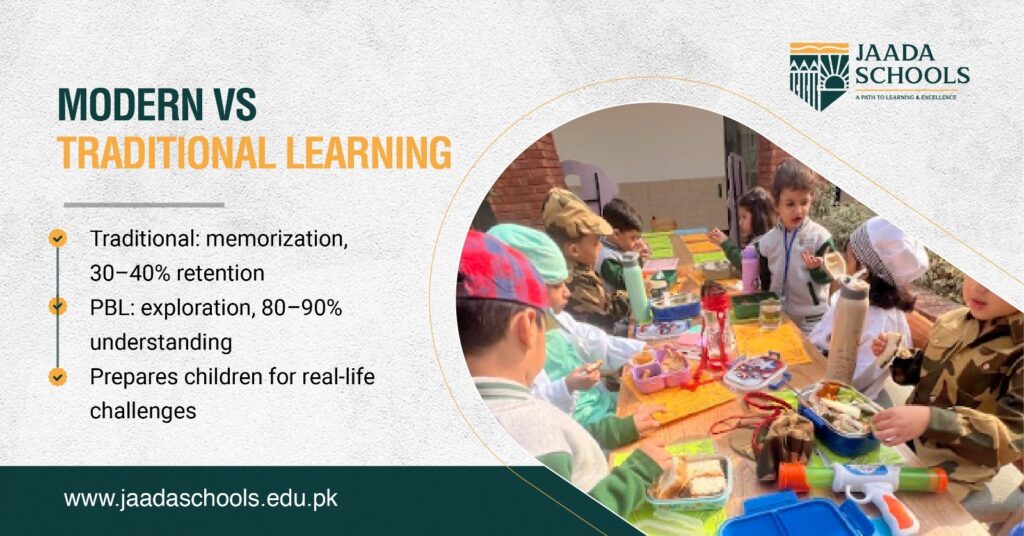
Traditional Learning focuses on lectures and exams. Students often memorize facts. However, understanding may remain limited.
In contrast, project-type learning encourages exploration. Children learn why things work, not just how. Therefore, knowledge becomes deeper.
Parents in Lahore now prefer modern methods. They want schools that prepare children for life, not just tests.
How Jaada School Delivers the Best Project-Based Learning Experience in Lahore?

Jaada School proudly stands among the leading project-based learning schools in Lahore. We provide high-quality education in safe, well-planned locations. Our Central Part Campus and Bahria Town Campus are carefully chosen to support a strong academic atmosphere. Therefore, parents feel confident about their children’s learning and safety.
At Jaada, project-based learning is part of every subject. Lessons are designed around real-life problems that students can understand and enjoy. Our teachers receive regular training to deliver this method effectively. As a result, classrooms stay interactive, engaging, and easy to follow for all students.
We also place a strong focus on STEM education. Project-based learning allows students to explore science, technology, engineering, and math through hands-on activities. Moreover, small class sizes ensure personal attention for every child. Teachers understand each student’s strengths and guide them accordingly.
Jaada School’s Education System Includes:
- A structured project-based learning approach in all grades
- Strong focus on STEM and practical learning
- Trained and supportive teachers
- Safe and positive learning environment
- Small class sizes for individual growth
Parents trust Jaada because the results are clear. Students gain confidence, skills, and a love for learning. Enrolling your child in Jaada School means choosing a future-ready education that supports growth, creativity, and success from an early age.
Conclusion: Choosing Project-Based Learning for Your Child’s Success
Choosing the right school matters. This learning prepares children for real life. It builds skills beyond books. At Jaada School, we believe education should inspire. This learning helps students grow with confidence. Therefore, parents feel satisfied and proud.
If you want the best education in Lahore, Jaada is the right choice. Project-based learning is not just a method here; it is our mission. Contact us now to know more Jaada School learning approach.
Frequently Asked Questions
1. Is project-based learning suitable for young children?
Yes, this learning suits young children very well. Teachers design simple, age-appropriate projects that encourage curiosity and hands-on exploration. This method makes learning fun while developing early thinking, communication, and social skills naturally.
2. How does Jaada School support parents?
Jaada School supports parents through regular communication and updates. Parents receive progress reports, attend meetings, and stay informed about their child’s learning journey. This open connection builds trust and helps parents actively support their child’s growth.
3. Will students perform well in exams?
Yes, students perform well in exams with project-based learning. This approach builds a strong understanding of concepts instead of memorization. As a result, students apply knowledge confidently during exams and assessments, leading to better academic performance.