

Summary: Education plays an important role in a child’s life. Education aims to prepare children for the changing world, enabling them to keep pace with the current era and technology. That’s why education has evolved from conventional schooling to modern schooling. In this blog, we will discuss how modern schooling differs from traditional schooling and how you can choose the right school with holistic education for your child. Let’s get into it.
——————————————————————————————————————————————————————————————————————————————-
Modern vs Traditional Education: What Sets Jaada Schools Apart
Best School in Lahore | Modern Education | Spiritual Well-being
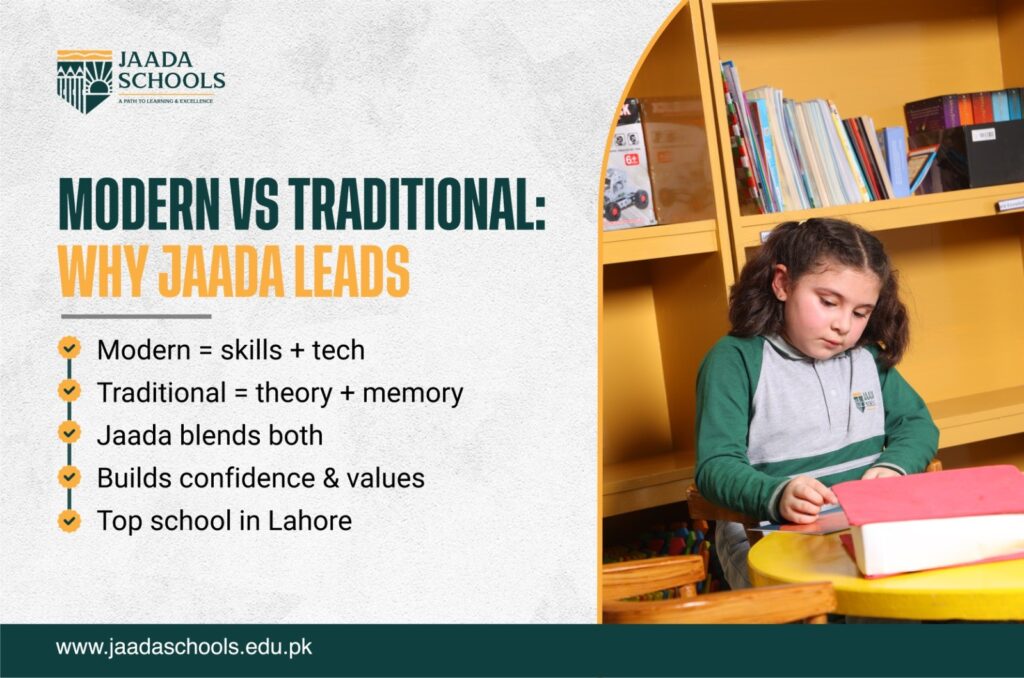
Education has evolved drastically over the years, sparking debates on the merits and limitations of traditional vs modern education. While traditional methods focus heavily on theoretical knowledge and rote learning, modern education emphasizes critical thinking, holistic development, and digital literacy. Today, schools like Jaada are leading the way in redefining how students learn, integrating the best of both worlds.
Traditional education is a structured, teacher-centered approach focused on rote learning and theoretical knowledge, where students primarily memorize information in a formal learning environment. In contrast, modern education is student-centered, emphasizing critical thinking, skill development, digital literacy, and holistic learning. It integrates technology and interactive teaching methods to make learning practical, engaging, and relevant for real-world challenges.
Understanding Traditional vs Modern Education
a. Traditional Education: Roots and Methods
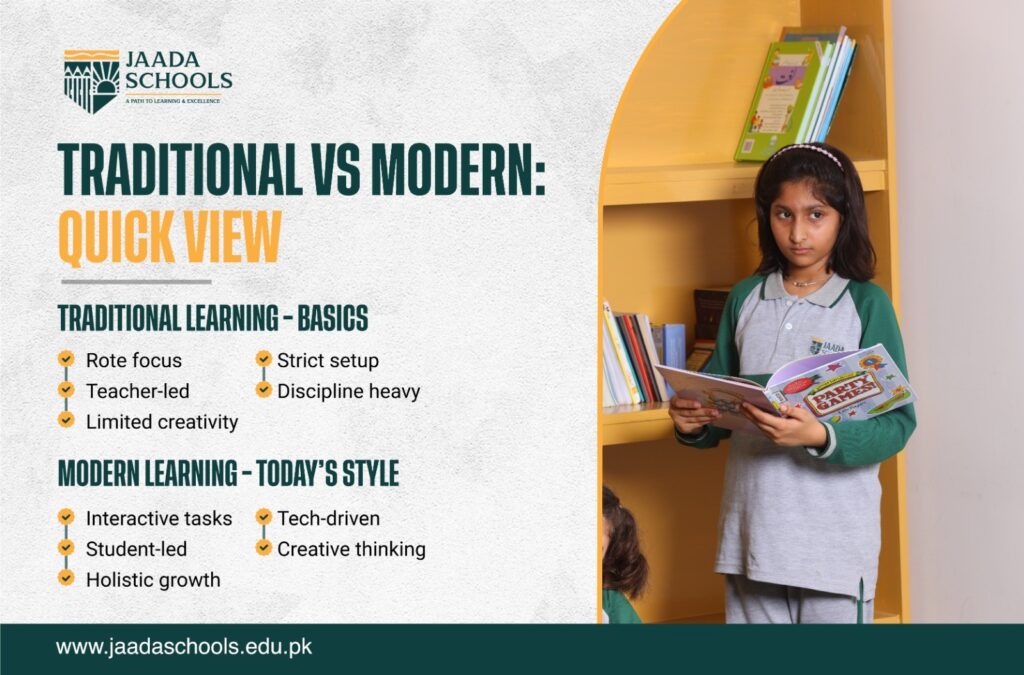
Traditional education has been the backbone of learning for centuries. It emphasizes structured learning, rote memorization, and theoretical knowledge. Students often follow a set curriculum, focusing on mastery of subjects through repetition and disciplined study.
- Rote learning: Memorization plays a central role in traditional classrooms. While it ensures that students retain information, it often limits creativity and critical thinking.
- Learning environment: Traditional classrooms usually follow a rigid environment, with teachers as primary knowledge holders and students as passive recipients.
- Character development: In some cases, traditional methods emphasize discipline, punctuality, and respect for authority, contributing to character building.
b. Modern Education: Flexibility and Innovation
On the other hand, modern education focuses on holistic learning and skill development. It aims to prepare students for real-world challenges by promoting creativity, problem-solving, and collaboration.
- Digital literacy: Modern classrooms integrate technology to help students navigate a digital world effectively.
- Modern teaching approach: Educators use interactive methods, project-based learning, and collaborative activities to engage students actively.
- Holistic education: Beyond academics, modern education nurtures emotional intelligence, social skills, and personal growth.
Key Differences Between Traditional and Modern Education
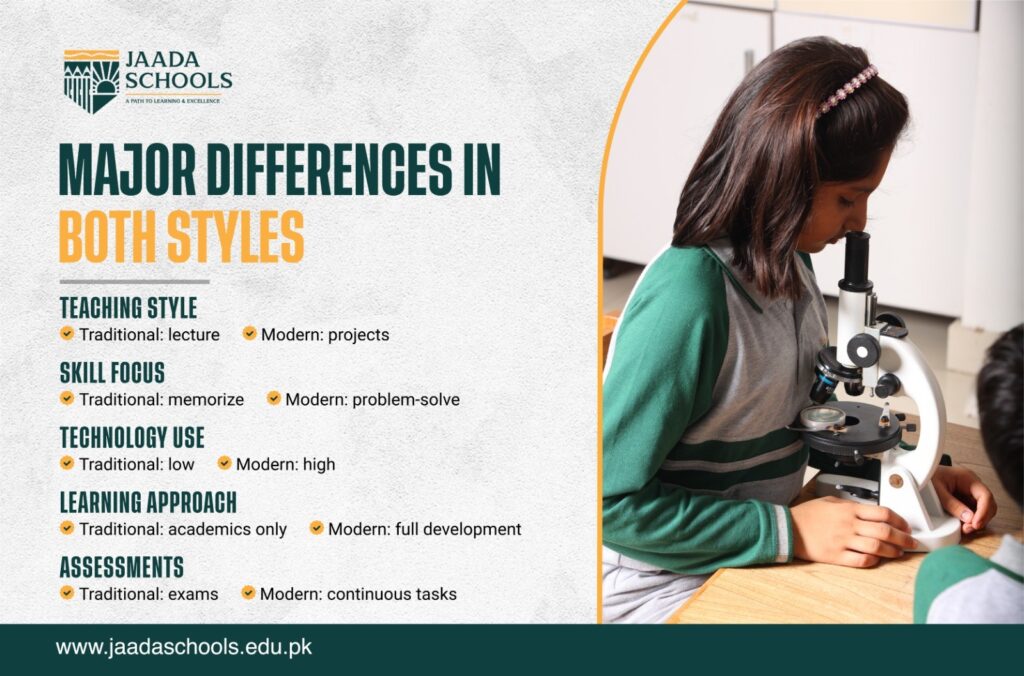
Understanding the contrasts between traditional vs modern education helps parents, educators, and policymakers make informed decisions. Here are the primary differences:
a. Teaching Methods
- Traditional Education: Teacher-centered, lecture-based, and relies on repetition.
- Modern Education: Student-centered, interactive, project-based, and emphasizes inquiry and experimentation.
b. Skill Development
- Traditional methods focus on memorization and theoretical knowledge.
- Modern education promotes critical thinking, problem-solving, and the application of knowledge in real-life scenarios.
c. Use of Technology in Education
- Technology is minimally used in traditional classrooms.
- Modern education actively incorporates digital tools, enhancing learning experiences and fostering digital literacy.
d. Holistic Learning
Modern education emphasizes holistic learning, addressing emotional, social, and intellectual growth. In contrast, traditional systems primarily focus on academics and rote memorization.
e. Assessment Styles
- Traditional assessments rely on written exams and standardized tests.
- Modern education uses continuous assessment, practical projects, and collaborative evaluation methods.
Clearly, the shift from traditional to modern education reflects society’s evolving needs, ensuring that students are not just knowledgeable but also skilled and adaptable.
Challenges in Traditional vs Modern Education
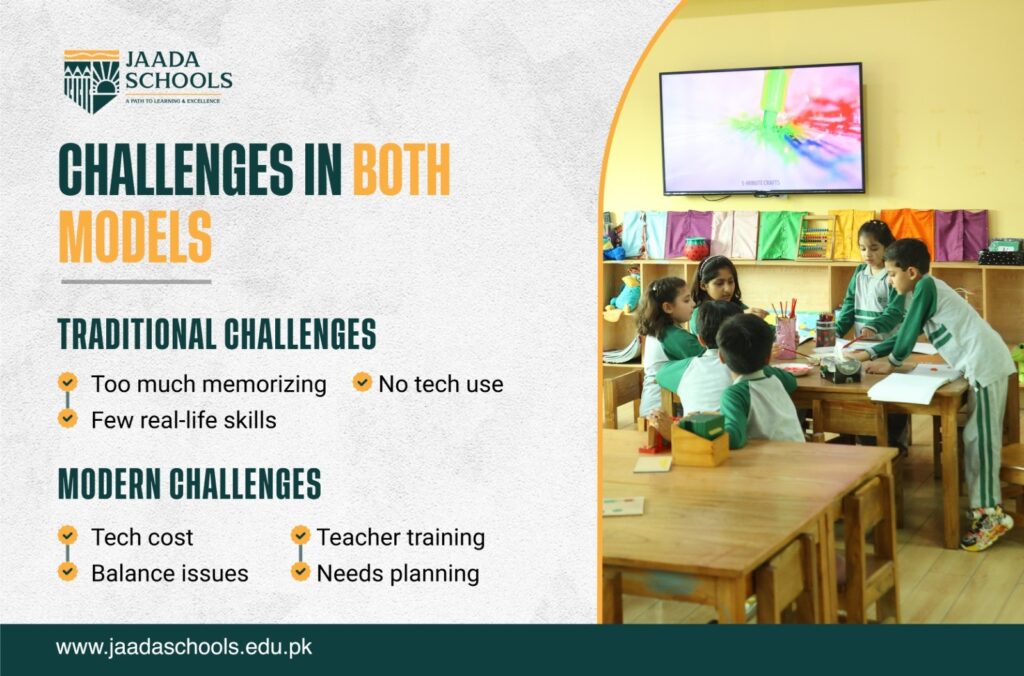
Both traditional vs modern education systems face unique challenges. Understanding these challenges helps educators, parents, and policymakers make informed decisions to improve learning outcomes.
a. Challenges in Traditional Education
Traditional education focuses on rote learning and structured teaching, but comes with several limitations:
- Overemphasis on rote learning
- Limits critical thinking and problem-solving skills.
- Students may memorize facts but struggle to apply knowledge in real-world scenarios.
- Lack of integration of technology
- Reduces opportunities for students to develop digital literacy.
- Leaves students less prepared for modern, tech-driven environments.
- Limited focus on skill development
- Emphasizes academics over practical skills or creativity.
- Students may miss out on personal growth, character development, and soft skills.
b. Challenges in Modern Education
While modern education promotes holistic learning and skill development, it also faces hurdles:
- High investment in digital infrastructure
- Requires advanced technology, multimedia tools, and online resources.
- Not all schools can afford the cost of a fully tech-enabled learning environment.
- Adapting to modern teaching approaches
- Teachers need training to implement interactive, student-centered methods.
- Educators accustomed to traditional methods may find it challenging to shift their mindset.
- Maintaining structure while fostering creativity
- Balancing discipline with freedom can be difficult.
- Without proper management, classrooms may become chaotic, affecting learning outcomes.
Despite these challenges, combining the best aspects of traditional education and modern education creates a powerful learning model. Schools like Jaada excel in blending structured academic rigor with innovative teaching approaches, ensuring students are well-prepared for both academic and real-world success.
Why Jaada Schools Stand Out in Traditional vs Modern Education?
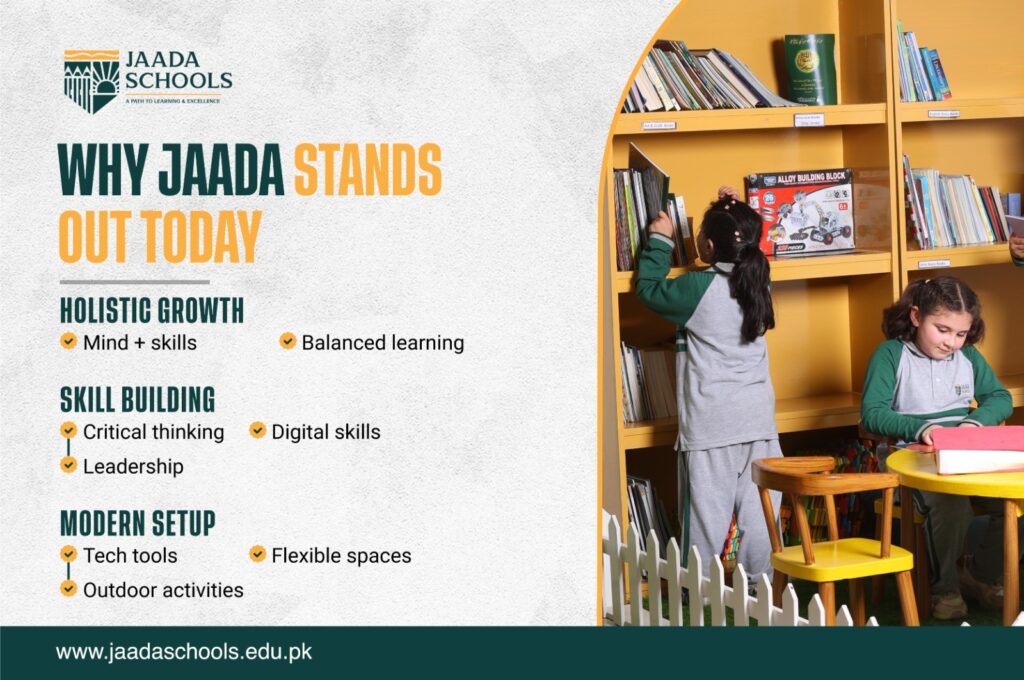
Jaada Schools have redefined education by bridging the gap between traditional vs modern education approaches. Here’s why they are leading the way:
a. Holistic Education Approach
Jaada integrates both theoretical knowledge and practical learning experiences. Students receive a holistic education that nurtures intellectual, emotional, and social development.
b. Emphasis on Skill Development
Through interactive classrooms and project-based learning, Jaada promotes:
- Critical thinking
- Digital literacy
- Leadership and problem-solving skills
c. Innovative Learning Environment
- Use of modern tools, technology, and multimedia enhances engagement.
- Flexible seating, collaborative workspaces, and outdoor learning activities foster a dynamic learning environment.
d. Character and Personal Development
Jaada ensures that students grow not just academically but also personally. Programs in ethics, empathy, and resilience contribute to overall character development.
e. Blending Traditional and Modern Methods
Jaada understands that traditional education provides discipline and a solid foundation, while modern education encourages creativity and innovation. By combining these approaches, students benefit from the best of both worlds.
Transitioning from theory-heavy rote learning to interactive, technology-driven education ensures that students are well-prepared for the future.
Conclusion
The debate between traditional vs modern education highlights that no single system is perfect. Traditional methods offer structure and theoretical depth, while modern approaches encourage critical thinking, holistic learning, and adaptability. Schools like Jaada demonstrate that integrating both can create a nurturing, skill-focused, and innovative learning environment. Apply online or visit us at any of our campuses.
By focusing on skill development, digital literacy, and character growth, Jaada Schools ensure students are equipped not only for academic success but also for real-world challenges. In today’s fast-paced, technology-driven society, this balanced approach truly stands out.
Frequently Asked Questions
What is the main difference between traditional and modern education?
Traditional education emphasizes rote learning and theoretical knowledge, whereas modern education focuses on critical thinking, practical application, and holistic learning.
How does Jaada Schools integrate modern teaching approaches?
Jaada Schools incorporate interactive classrooms, digital tools, project-based learning, and collaborative activities to promote digital literacy and skill development.
Why is holistic education important in modern learning?
Holistic education nurtures intellectual, emotional, and social growth. It ensures students are not only academically proficient but also possess strong character, empathy, and problem-solving skills.